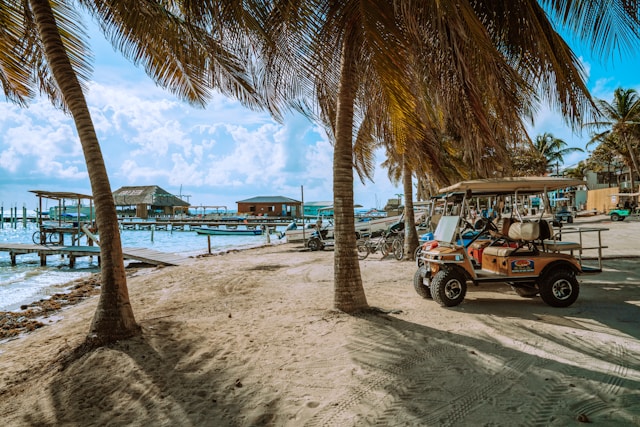
Photo by Meritt Thomas on Unsplash
Tradetraveljournal | When Frik De Meyere decided to leave Europe behind and move to Belize, the catalyst was surprisingly simple: mail, or more specifically, the absence of it. In his former life, his mailbox dictated his schedule. Each morning, a flood of letters arrived: bills, tax notices, and administrative demands gradually shifting his focus from business innovation to bureaucratic maintenance. What had once been a life of 95% business and 5% administration had slowly reversed its balance. The system owned his time.
In Belize, that paradigm changed. Here, the absence of the daily mail represented something far greater: the absence of constant oversight. For De Meyere, it signified freedom, a release from a life defined by forms and filings. Belize offered a blank canvas.
Two decades ago, when Frik and his family first arrived, Belize was still rooted in traditional industries. Farming and fishing shaped the economy. Banana, citrus, and sugarcane dominated the inland, while coastal communities thrived on the sea. Life was communal. Families worked collectively: daughters became teachers, sons fished or farmed, and extended family structures supported the next generation.
But Belize, with a population of around 450,000 and a median age of just 23, is no longer defined solely by its past. It’s a young nation, buzzing with potential and ready for reinvention. De Meyere saw something many didn’t: an entrepreneurial frontier. As modern Belizeans began charting new paths, pursuing education, starting businesses, and seeking financial independence, the economy began to shift. And within that shift lay opportunity.
Unlike larger countries where entrepreneurs may feel like just another number, Belize offers something rare: visibility. In a small, developing nation, effort and innovation can produce a real, noticeable impact. He quickly learned that ideas, even unconventional ones, could take root.
He often jokes about one of his earliest experiences when asked by locals if he had any business ideas. His response: Look at the Yellow Pages. Every category was wide open. At the time, something as ordinary as a coffee shop seemed unthinkable. Coffee culture simply didn’t exist in Belize. Locals were familiar with Nescafé, but espresso, cappuccino, and oat milk lattes were alien concepts.
When the first specialty coffee shop opened in his village a decade ago, many dismissed it as foolish. Who would pay $8 for a cappuccino? But De Meyere saw the gap and the potential. While tourists and expats sought their daily brew, Belizeans slowly grew curious. Today, coffee culture in Belize is thriving. Coffee shops are common. Baristas are trained. Locally grown beans are gaining traction. What once seemed absurd is now a growing sector, and early bets paid off.
Another simple idea: a car wash. It didn’t require much, just a bucket and a sponge to start. Still, many locals couldn’t see the value. “Nobody washes their car here,” they said. But De Meyere anticipated the demand. As more expats moved in and lifestyles evolved, so did expectations for convenience. The early adopters who launched car wash services are now running profitable operations, charging premium rates for detailing and interior services.
And yet, some opportunities still remain untapped. For years, Frik has advocated for a proper fish market in Placencia. It sounds counterintuitive in a seaside village known for fishing, but consumer habits are changing. With more households having both partners working full-time and an influx of new residents, convenience is no longer a luxury it’s a necessity. The concept of purchasing fresh fish on the way home from work fits a new lifestyle that is emerging across Belize. Still, no one has acted on the idea yet.
What Frik De Meyere and his family have discovered is that Belize is a two-way street. They came in search of simplicity and purpose. What they found was a country eager to learn, build, and evolve. Running their coffee shop required baristas, but there were no training schools. So they trained their own team. Starting a real estate company demanded IT skills, but no formal IT programs existed. Instead, they hired a young man with informal experience, invested in his development, and helped him transform a hobby into a profession.
This pattern repeats across sectors. From accounting to design to hospitality, Belize is filled with individuals ready to rise if given the chance. Formal systems may be lacking, but ambition is not. For Frik, mentorship became a natural extension of doing business in a developing economy. It wasn’t just about starting companies. It was about investing in people.
De Meyere’s experience underscores a powerful lesson: in Belize, the barriers to entry where real capital is limited, infrastructure is evolving, and sometimes, the hardest part is simply convincing others that your vision is viable. But the rewards are equally real. The freedom to shape industries. The ability to impact communities. The chance to leave a legacy.
The quirks that once seemed inconvenient, like the absence of mail, have become symbols of possibility. Belize is not just a destination. It’s a collaborative project. A nation is being built in real time by those bold enough to see potential where others see limitation.
And that’s the question Frik De Meyere leaves others with: When you look at a place like Belize, do you see quirks or do you see opportunity?